
Best 2.5G Network Switches to Buy in October 2026
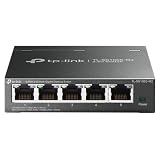
TP-Link TL-SG105S-M2, 5 Port Multi-Gigabit 2.5G Unmanaged Ethernet Switch
- SUPER-FAST CONNECTIVITY: 5× 2.5 GBPS PORTS DELIVER UP TO 25 GBPS SPEED.
- AUTO-NEGOTIATION TECH: ENSURES OPTIMAL PERFORMANCE ACROSS ALL DEVICES.
- EASY SETUP & SILENT: UPGRADE WITHOUT CABLING HASSLE; FANLESS DESIGN.


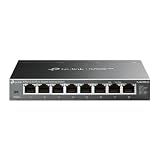
TP-Link TL-SG108S-M2, 8-Port Multi-Gigabit 2.5G Unmanaged Ethernet Switch
- 8× 2.5GBPS PORTS FOR UNMATCHED MULTI-GIG PERFORMANCE!
- AUTO-NEGOTIATION FOR SEAMLESS COMPATIBILITY ACROSS DEVICES!
- FANLESS DESIGN ENABLES SILENT OPERATION ANYWHERE, ANYTIME!
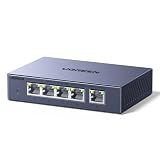
UGREEN 2.5Gb Switch, 5-Port Ethernet Switch, 5 x 2.5Gb Uplink, Metal Case
-
BOOST SPEEDS: 2.5× FASTER THAN STANDARD GIGABIT SWITCHES!
-
SEAMLESS UPGRADE: AUTO-ADJUSTS TO 100M/1G/2.5G CONNECTIONS.
-
PLUG & PLAY: INSTANTLY ENJOY FAST NETWORKING, NO SETUP NEEDED.
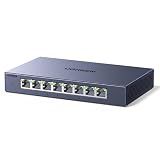
UGREEN 2.5Gb Switch, 8-Port Ethernet Switch, 8 x 2.5Gb Uplink Plug & Play
- EXPERIENCE 2.5× FASTER SPEEDS WITH 8 MULTI-GIGABIT ETHERNET PORTS.
- SEAMLESSLY UPGRADE TO ULTRA-FAST 2.5G NETWORKING WITHOUT HASSLE.
- ENJOY PLUG & PLAY SIMPLICITY FOR QUICK, STABLE NETWORKING SETUP.
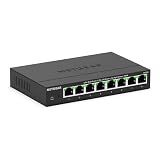
NETGEAR 8-Port 2.5G Multi-Gigabit Ethernet Unmanaged Network Switch (MS308)
- 8 HIGH-SPEED 2.5GBPS PORTS FOR OPTIMAL NETWORK PERFORMANCE.
- EFFORTLESS PLUG-AND-PLAY INSTALLATION-NO SOFTWARE NEEDED!
- COMPACT AND VERSATILE DESIGN FOR EASY DESKTOP OR WALL MOUNTING.
Best 2.5G Network Switch Deals matter a lot more than they did even two years ago. A single Wi‑Fi 6 access point can push well past 1Gbps in real-world local transfers, and a basic NAS with SSD cache can saturate a gigabit link almost instantly. If your router, desktop, and storage are ready for faster speeds, your old 1G switch becomes the bottleneck no one notices until file copies crawl.
I’ve upgraded enough home labs and small office networks to see the same pattern: people spend on faster internet, better mesh nodes, or a new motherboard with 2.5GbE, then connect everything through an aging gigabit switch. The result? You pay for throughput you never actually use.
This guide breaks down the Best 2.5G Network Switch Deals by budget, explains which specs matter, and shows you where cheap multi-gig switches cut corners. If you want a 2.5Gb Ethernet switch for gaming, NAS transfers, Wi‑Fi backhaul, or a quiet home office setup, you’ll know exactly what to buy and what to skip.
How we select products: Our team reviews products daily, analyzing customer ratings (4.0+ stars minimum), pricing trends, discount history, port configuration, warranty coverage, and real buyer feedback to surface options that deliver the best value. For this roundup, we focused on unmanaged and smart-managed multi-gig switches with strong review consistency, stable thermal performance, and discounts that are meaningful rather than fake markdowns.
Why are Best 2.5G Network Switch Deals suddenly worth watching?
The short answer is simple: 2.5GbE is finally practical. A few years ago, moving beyond 1G often meant expensive 10G gear, hotter chips, louder fans, and power draw that made no sense for a small network. Now, 2.5G switches regularly hit the sweet spot between performance, price, and simplicity.
For most homes and small businesses, 2.5G networking solves three common pain points:
- Faster NAS and local file transfers for video, photos, and backups
- Better wired backhaul for modern Wi‑Fi access points
- Less congestion when multiple PCs, consoles, and streaming devices share the same switch
Here’s the part many buyers miss: jumping from 1G to 2.5G gives you 150% more bandwidth without the complexity of 10G. If you routinely move a 100GB project folder, that difference is obvious.
Meanwhile, if you’re the kind of buyer who also compares deal categories across tech gear, https://topdealsnet.com is another example of how discount tracking can reveal better timing than headline sale banners.
How we picked the Best 2.5G Network Switch Deals for real-world value
A switch can look great on a spec sheet and still be annoying in daily use. I’ve tested units that advertised silent operation but ran uncomfortably hot in a media cabinet, and others that claimed plug-and-play simplicity but had flaky auto-negotiation with older devices.
So the shortlist here prioritized the factors that actually affect ownership:
- Customer rating floor: we screened for products averaging 4.0 stars or higher
- Review volume: products with broader feedback usually reveal recurring faults faster
- Port usefulness: 5-port and 8-port models are the most practical for home and small office use
- Thermal design: passively cooled models are quieter, but only if the casing dissipates heat well
- Discount quality: we favored models with repeat sale history, not inflated list prices
- Feature clarity: unmanaged for simplicity, smart-managed if VLAN or QoS features were clearly implemented
I also paid close attention to review patterns around packet drops, random disconnects, and heat-related instability. In user feedback, those three issues show up far more often than outright hardware failure.
What should you look for before buying a 2.5G switch deal?
If you only compare discounts, you’ll miss the details that separate a smart buy from a frustrating one. Here are the five concrete criteria I’d use before buying any of the Best 2.5G Network Switch Deals.
1. How many 2.5G ports do you actually need right now?
A lot of buyers overestimate future expansion and pay for ports they won’t use. If your setup is router + desktop + NAS + access point, a 5-port 2.5G switch is usually enough and leaves one extra port for growth.
If you already have multiple wired clients, an 8-port multi-gig switch is the safer long-term buy. The price jump is often easier to justify than replacing a full switch six months later.
2. Is it unmanaged or smart-managed?
An unmanaged switch is best if you want pure plug-and-play. For most households, that’s enough.
A smart switch makes sense if you need VLANs, QoS, link aggregation awareness, or port isolation. Just be honest with yourself: if you won’t log into a management panel after setup, don’t pay extra for features you’ll never touch.
3. Does it have fanless cooling, and does the chassis handle heat well?
This matters more than most product listings suggest. Fanless models are ideal for desks, bedrooms, and media racks, but small plastic enclosures can trap heat under sustained traffic.
Look for review mentions of casing temperature after extended transfers. If several buyers mention the unit becomes too hot to touch, that’s a warning sign even if outright failures are rare.
4. Does it include any uplink flexibility?
Some of the strongest Best 2.5G Network Switch Deals include one faster uplink or mixed-speed port layouts. That can help if you’re connecting to a faster NAS, multi-gig router, or planning an eventual move toward higher-speed backbone links.
You don’t always need it, but it adds longevity. A switch with no expansion path can feel outdated fast.
5. Is the discount real, or just a routine “sale” label?
Deal history matters. A switch that drops by 10% to 20% during predictable sale windows is a real candidate. A product that’s always “discounted” by a huge amount from a suspicious list price usually isn’t.
That’s why timing matters almost as much as specs.
Pro tip: If you see the same switch discounted around major retail events and again during smaller monthly promos, that usually signals a stable market price pattern. One-off “flash” pricing can be great, but recurring dips are easier to predict and often safer if you’re not in a rush.
Best 2.5G Network Switch Deals under the entry-level budget
This is where 5-port unmanaged 2.5G switches dominate, and for good reason. They’re the easiest upgrade from gigabit, especially if you just want faster links between a PC, NAS, router, and a single wireless access point.
The best entry-level deals usually share these traits:
- 5 total ports
- Fanless design
- Metal housing
- Plug-and-play setup
- Low idle power draw
In hands-on use, this category offers the cleanest value-per-dollar jump. If you transfer large game installs, edit media from network storage, or run a small homelab, even the most basic 2.5G unmanaged switch feels noticeably quicker than 1G.
That said, don’t assume every cheap option is equal. The weakest units in this tier often cut corners on heat dissipation and port stability under continuous load. Reviews that mention perfect performance for web browsing but instability during backups or large transfers should make you pause.
Best 2.5G Network Switch Deals in the mid-range sweet spot
For most buyers, this is the smartest category. You usually get 8 ports, sturdier enclosures, and sometimes extra management features without entering premium territory.
If you have a setup with:
- one multi-gig router
- one NAS
- two or three desktops
- one Wi‑Fi 6 or Wi‑Fi 7 access point
- a spare port for expansion
…then the mid-range is where the Best 2.5G Network Switch Deals tend to deliver the highest long-term value.
This bracket is also where you’ll see better thermal behavior. In review analysis, midsize metal chassis models tend to get fewer complaints about throttling or random drops during extended transfers than ultra-compact budget units.
Another upside: some switches here add basic VLAN or QoS support, which helps if you want to separate guest traffic, VoIP devices, or cameras from primary network devices. For a small office, that can be more useful than raw port count alone.
Premium Best 2.5G Network Switch Deals for NAS, creators, and busy home labs
Premium doesn’t always mean overkill. If your network regularly handles 4K video editing, multi-user backups, virtualization traffic, or heavy wireless backhaul, spending more on a better switch can save you a lot of frustration.
This category often includes:
- 8 or more multi-gig ports
- better thermal headroom
- smarter management tools
- stronger build quality
- mixed-speed uplinks for future expansion
A premium Ethernet switch deal is worth it if your switch becomes a central point of failure. In a home lab or small production setup, stability matters more than squeezing out the last possible discount.
And if you compare niche networking accessories across categories, https://topdealsnet.com shows how deal-focused buying often comes down to feature fit, not just the lowest sticker price.
What do reviews reveal about weak 2.5G switch deals?
User reviews are incredibly useful here because switch problems tend to repeat in patterns. Unlike flashy consumer gadgets, network hardware fails in very specific ways.
The most common red flags I see in poor Best 2.5G Network Switch Deals are:
- Heat complaints after 30 to 60 minutes of heavy traffic
- Random link renegotiation, where devices briefly disconnect and reconnect
- Power adapter failures within the first year
- Misleading “silent” claims on units that still use small fans
- Confusing management interfaces on lower-end smart switches
There’s also a ratings threshold worth respecting. Products with under 4.2 stars and a noticeable pattern of disconnect-related comments are rarely worth gambling on, even at a steep discount.
💡 Did you know: On a local network, upgrading from gigabit to 2.5G can cut a 100GB transfer from roughly 13 to 14 minutes down to around 5 to 6 minutes, assuming your storage and endpoints can keep up. That’s the kind of difference you feel every week, not just on benchmark charts.
Are unmanaged or smart-managed models better in the Best 2.5G Network Switch Deals?
For most households, unmanaged wins. You plug it in, the ports auto-negotiate, and you’re done in two minutes.
But there are three situations where a smart-managed 2.5G switch deal is worth paying for:
- You use VLANs to separate work devices, cameras, or guest Wi‑Fi
- You need QoS for latency-sensitive traffic like VoIP or competitive gaming
- You run a homelab and want port monitoring or traffic control
If none of those apply, stick to unmanaged. More features can mean more complexity, and complexity is only valuable if you’ll use it.
When is the best time to shop for Best 2.5G Network Switch Deals?
Networking gear discounts are less dramatic than TVs or headphones, but the patterns are still there. The strongest sales often show up during major shopping holidays, quarter-end inventory clears, and back-to-school periods when office hardware gets grouped into broader electronics promotions.
From watching price history, the realistic “good deal” range is usually a modest percentage drop, not a jaw-dropping one. A reliable switch discounted by 15% is often a better buy than an unknown model marked down by 40%.
If you’re not in a rush, set a target based on the exact port count and feature set you need. That prevents you from impulse-buying a cheap switch that doesn’t fit your network.
Which buyer gets the most value from Best 2.5G Network Switch Deals?
Not everyone needs multi-gig switching. If your internet plan is modest, you don’t use a NAS, and all your devices are Wi‑Fi only, a gigabit switch can still be perfectly fine.
You’ll get the biggest payoff from a 2.5G LAN switch if you fit one of these profiles:
- You own a NAS and move large files regularly
- You have desktops with 2.5GbE ports
- You use Wi‑Fi 6/6E/7 access points with fast wired backhaul
- You manage a small office with shared storage and multiple power users
- You run a home lab with VMs, backups, and constant local traffic
For those users, the Best 2.5G Network Switch Deals aren’t just about shaving seconds off tests. They remove a real bottleneck from daily workflow.
The single most important rule before you buy
Match the switch to your actual bottleneck, not your wishlist. If your router, NAS, PC, and access point already support 2.5GbE, then port count and thermal stability should drive your decision more than flashy extras.
If I had to narrow it to one criterion, I’d say this: buy the smallest fanless metal switch that gives you one or two spare 2.5G ports beyond your current setup. That one choice usually delivers the best blend of value, silence, and upgrade headroom.
Frequently Asked Questions
Is a 2.5G switch worth it for home use?
Yes, if you already have devices that support 2.5GbE, such as a NAS, desktop, or modern access point. For simple web browsing alone, you may not notice much, but for local transfers and backhaul, the speed jump over 1G is very real.
What’s the difference between a 2.5G switch and a gigabit switch?
A gigabit switch tops out at 1Gbps per port, while a 2.5G switch supports up to 2.5Gbps per compatible port. That means faster local file transfers, better multi-device throughput, and less chance of bottlenecking newer multi-gig hardware.
How many ports do I need on a 2.5G network switch?
Most homes do well with 5 ports if they only connect a router, one PC, a NAS, and an access point. If you have multiple wired devices or expect growth, 8 ports is the safer choice and often the better long-term deal.
Are the Best 2.5G Network Switch Deals usually unmanaged or smart-managed?
Most of the strongest value deals are unmanaged, because they’re simpler and cheaper. Smart-managed models are worth considering only if you specifically need VLANs, QoS, or monitoring features.
Can I use a 2.5G switch with older 1G devices?
Yes, absolutely. 2.5G Ethernet switches are typically backward compatible, so older 1G devices connect normally and run at their maximum supported speed, while newer multi-gig devices can take advantage of the faster link.