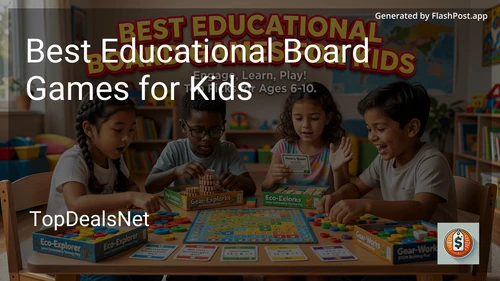
Best Educational Board Games for Kids to Buy in November 2026
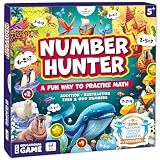
Number Hunter Math Board Game for Kids 5-7, 1st Grade & Kindergarten | Addition and subtraction game, STEM toy for 5+ year old, homeschool essentials, classroom learning, family game night
- MAKE MATH FUN WITH AN EXCITING ADVENTURE BOARD GAME FOR KIDS!
- SUPPORTS EARLY STEM SKILLS WHILE KEEPING KIDS ENGAGED AND LEARNING.
- PERFECT EDUCATIONAL GIFT FOR BIRTHDAYS, FOSTERING A LOVE FOR MATH!


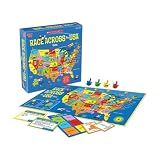
Scholastic Race Across the USA Geography Board Game for Kids, Ages 8+ | Scholastic Race Across the USA, Geography Learning Board Game, Learn U.S. States, Capitals & Landmarks, Ages 8+
-
ENGAGING EDUCATIONAL FUN: EXPLORE U.S. GEOGRAPHY WITH FRIENDS!
-
ADAPTABLE LEARNING: GRADE-APPROPRIATE QUESTIONS FOR EVERY PLAYER.
-
PERFECT FOR GROUP PLAY: UNITE KIDS OF ALL AGES IN FRIENDLY COMPETITION!
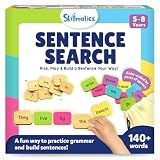
Skillmatics Sentence Search – Educational Board Game, Stocking Stuffer | Sentence Building, Word Play,120+ Tiles (1.3 x 1 Inches), Kindergarten to Grade 2, Christmas Gift for Kids Ages 5, 6, 7, 8
- FUN, HANDS-ON ACTIVITY BOOSTS READING AND WRITING CONFIDENCE!
- OVER 120 COLOR-CODED TILES ENHANCE VOCABULARY AND GRAMMAR SKILLS.
- IDEAL GIFT FOR AGES 5-8, PROMOTING INDEPENDENT LEARNING AND CREATIVITY!
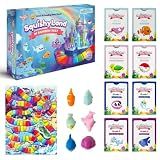
The Fidget Game SquishyLand in Rainbow Reef Board Game, Pre-K to 2nd Grade | Educational & Phonics Kindergarten Learning Activities, Mochi Squishy Toys Set, 2-6 Players
- ENGAGING GAMES DEVELOP LITERACY SKILLS FOR PRE-K TO GRADE 2.
- ROOTED IN THE SCIENCE OF READING, CRAFTED BY EXPERT TEACHERS.
- INCLUSIVE DESIGN SUPPORTS ALL ABILITIES, ENSURING EVERY CHILD SUCCEEDS.
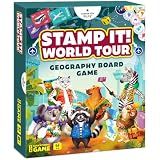
Stamp It! World Tour, Educational Map Geography Board Game for Kids 8-12 | Family, classroom & homeschool essential, learning gift, travel across the world, collect stamps & practice geography trivia
- ENGAGING GEOGRAPHY ADVENTURE FOR KIDS AGED 8-12!
- LEARN AND PLAY: MEMORABLE GEOGRAPHY THROUGH FUN GAMEPLAY!
- PERFECT GIFT FOR KIDS, PRE-TEENS, AND CLASSROOM LEARNING!
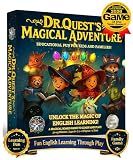
Dr. Quest's Magical Adventure–Educational Board Game for Kids Ages 6-9 – Spelling & Grammar Learning Game for Early Elementary | 180 Questions | Screen-Free Homeschool & Family Game | 2-6 Players
- ENGAGING LANGUAGE LEARNING THROUGH MAGICAL QUESTS!
- PERFECT FOR FAMILY FUN: 2–6 PLAYERS, 30–45 MINUTES!
- SCREEN-FREE ADVENTURE: IDEAL FOR HOMESCHOOL & SKILL-BUILDING!
The Best Educational Board Games for Kids do two jobs at once: they hold a child’s attention for 20 to 40 minutes, and they quietly build skills like counting, spelling, strategy, memory, or turn-taking. That combination is rarer than most parents expect, especially once you’ve sat through a “learning game” that feels more like homework with cardboard pieces.
I’ve spent enough time around family game nights, classroom game bins, and kid gift lists to notice a pattern: the games that actually get replayed are usually the ones with simple rules, short turns, and one clear skill focus. The ones that collect dust tend to be overlong, too luck-heavy, or pitched at an age range so wide it satisfies nobody.
If you want a game that teaches without causing eye-rolls, this guide breaks down the Best Educational Board Games for Kids by budget, age-fit, and learning value. You’ll also see what separates a genuinely useful learning game from a colorful box with weak replay value.
How we select products: Our team reviews products daily, analyzing customer ratings (4.0+ stars minimum), pricing trends, discount history, and real buyer feedback to surface options that provide the best value. For this roundup, we prioritized educational board games with strong replay value, age-appropriate complexity, and consistent feedback about durability, clarity of rules, and skill-building payoff.
What makes the Best Educational Board Games for Kids actually worth buying?
The best picks aren’t just “educational” on the box. They create repeat practice in a specific skill area, usually through pattern recognition, basic math, vocabulary, logic, or executive function, while still feeling competitive or collaborative enough that kids ask to play again.
A good benchmark: the strongest family-friendly learning games usually land in the 15- to 35-minute range. That’s long enough to practice a skill and short enough to avoid attention drop-off, especially for kids under 10.
Here’s the fastest way to judge value:
- Best for preschoolers: games with color matching, sequencing, and turn-taking
- Best for early elementary: games that build phonics, counting, money skills, or visual logic
- Best for ages 8-12: strategy games with planning, resource decisions, and cause-and-effect thinking
- Best overall family picks: games adults don’t hate after the third round
If your goal is broader family play, cooperative formats can work especially well because they reduce frustration while still teaching planning and communication. For more team-based options, Topdealsnet covers a strong mix of kid-friendly cooperative titles.
How we picked the Best Educational Board Games for Kids
I looked at the same factors experienced parents and teachers quietly rely on after buying a few disappointing “learning” games: replay rate, rules friction, age accuracy, and skill transfer. A game can have a great concept, but if setup takes 15 minutes or the instructions are confusing, it won’t stay in rotation.
The selection criteria focused on five measurable points:
-
Skill clarity
Each game needed to teach or reinforce at least one clear skill, such as addition, word-building, memory, logic, or social reasoning. -
Realistic age range
Boxes often overstate flexibility. A game labeled for ages 4 to 10 usually has a much narrower sweet spot, so age-fit mattered more than marketing claims. -
Replay value
The strongest educational board games for children stay fresh after 10+ plays, either because outcomes vary or the challenge scales. -
Turn length
Kids tune out during long waits. Games with brisk turns consistently perform better in homes and classrooms. -
Feedback patterns
We paid close attention to repeated complaints about flimsy components, confusing rulebooks, and rounds that drag past 45 minutes.
That last point matters. In family board game categories, products with ratings below roughly 4.2 stars often show the same issues: poor durability, awkward pacing, or educational claims that don’t match the actual gameplay.
Best Educational Board Games for Kids under $25
If you want the best value, this bracket is where many of the smartest purchases live. Under $25, the top performers are usually compact games with one strong learning objective and low setup time.
Best under $25 for ages 3-5: matching and early logic games
For preschoolers, the winning formula is simple: large pieces, visual cues, and rounds under 15 minutes. Games in this group often teach color recognition, shape matching, memory, and taking turns without needing reading skills.
Look for features like:
- Oversized cards or tiles
- No reading required
- 10- to 15-minute play sessions
- Cooperative or low-conflict gameplay
- Components sturdy enough for frequent handling
The best educational board games for preschool kids don’t try to teach six things at once. A focused matching or sequencing game usually delivers better learning than a crowded “all-in-one” title.
Best under $25 for ages 5-7: early reading and counting games
This is the sweet spot for phonics, sight words, simple arithmetic, and money recognition. Kids at this stage benefit most from games that hide repetition inside fast rounds, especially if they involve rolling, sorting, building, or collecting.
A standout rule of thumb: if a game requires an adult to constantly explain the same step after round two, it’s probably too advanced. The best beginner educational games become self-running quickly, which is exactly what helps confidence grow.
Best under $25 for classrooms and playdates
Short educational games with 2 to 4 players tend to work best here. You want something that resets quickly and doesn’t fall apart if one child loses focus for a minute.
Games that train memory, visual scanning, or category thinking often shine in group settings because they’re easy to teach in under three minutes. That makes them far more practical than longer strategy games during a school-day transition or birthday-party downtime.
Best Educational Board Games for Kids in the $25-$50 sweet spot
This is where you typically get the best balance of durability, replay value, and skill depth. If you’re buying one game meant to stay in rotation for a year or more, this range usually delivers the strongest return.
Best overall family pick: strategy-light games with real learning value
The best family educational board games in this bracket teach kids to plan ahead without overwhelming them. Think multi-step turns, resource choices, pattern building, or map-style movement that rewards attention and foresight.
These games often work best for ages 6-10, because they’re complex enough to feel satisfying but not so advanced that younger players need constant help. That’s the point where educational play starts overlapping with genuine strategy.
Best for math skills: games that teach numbers without worksheets
The strongest math board games don’t feel like timed drills. They build mental addition, subtraction, number sense, and probability awareness through repeated decisions.
Look for mechanics like:
- Dice combinations
- Token trading
- Point optimization
- Pattern scoring
- Basic budgeting or resource management
A game that makes a child compare “take 3 now” versus “save for 6 later” is doing more cognitive work than a simple counting race. That’s why many of the Best Educational Board Games for Kids focus on decision-making, not just right answers.
Best for reading and vocabulary: word games kids will replay
Good language-based games hit a narrow balance: challenging enough to stretch vocabulary, but not so difficult that younger players shut down. In practice, that means shorter words, visual supports, category prompts, or flexible scoring.
If you’re shopping for older elementary kids, this is also where age-specific strategy and language games get much stronger. For that narrower range, you can see the details on games better suited to more advanced readers and planners.
Premium picks over $50: are they worth it?
Sometimes yes, but only if you’re buying for frequent play, multiple siblings, or a classroom shelf. Premium educational board games usually justify the higher cost with thicker components, more varied scenarios, stronger solo or team modes, and broader age longevity.
Here’s the catch: expensive doesn’t automatically mean more educational. Some premium games add complexity without adding actual learning benefit, which can lower replay value for younger kids.
When a premium educational board game makes sense
A higher-end option is often worth it if:
- It supports 4+ players well
- It scales across at least two age bands
- It has expansion-like variability built into the base game
- Components can survive heavy weekly use
- Adults genuinely enjoy playing it too
If a game can work for family night at age 7 and still hold interest at age 10, that longer usable life can justify the cost more than flashy extras ever will.
What to look for before you buy educational board games for children
The fastest way to avoid disappointment is to evaluate the game like a teacher and a tired parent at the same time. You want measurable learning value, but you also need smooth play.
1. Match the true age range, not the box fantasy
Many games claim a spread of 4 to 8 years or 6 to 12 years, but real-world fit is usually tighter. A four-year-old and an eight-year-old rarely enjoy the same pace, reading demands, or strategy depth.
2. Aim for 4.3+ stars with a large review base
A strong rating threshold helps filter out weak rule design and fragile components. If a game holds 4.3 stars or higher across hundreds of reviews, complaints about broken pieces or confusing rules tend to drop sharply.
3. Prioritize 30 minutes or less for younger kids
For children under 8, long rounds often kill replay value. The best educational board games for kids in this age group usually finish in 10 to 30 minutes, with active turns every minute or two.
4. Check whether the learning is built into the game, not pasted on
If the game pauses constantly for quiz-style prompts, kids notice. The better design is skill-through-play: counting to move, spelling to build, planning to score, or comparing options to win.
5. Look at component durability
Thin cards, tiny tokens, and weak trays create frustration fast. If reviews repeatedly mention bent boards, peeling print, or missing pieces, that’s a bigger problem in kids’ games than in adult hobby games because handling is rougher and repeat use is higher.
Pro tip: A game with fewer than 30 pieces is often easier to maintain in busy households. Fewer components usually means faster setup, easier cleanup, and fewer “we can’t play because a token is gone” moments.
What the reviews say: red flags that show up again and again
Review patterns are incredibly useful in this category because the same flaws repeat across low-performing titles. You can usually spot the duds before buying if you know what to scan for.
Red flag #1: “Educational” but mostly luck-based
If winning depends almost entirely on random draws or rolls, the learning payoff is weak. Luck has a place, especially for younger players, but the best educational family games include at least one layer of choice.
Red flag #2: Instructions that adults struggle to teach
A children’s learning game should not require a 12-page rule interpretation session. If multiple reviews mention house rules, confusing examples, or unclear scoring, expect frustration.
Red flag #3: Turns are too long for the age group
For kids ages 4 to 7, waiting more than 90 seconds between meaningful actions is often enough to trigger disengagement. That’s why compact card-and-tile learning games frequently outperform bigger board setups for younger players.
Red flag #4: One child dominates every round
This happens often in vocabulary and trivia-heavy games with mixed ages. If older siblings can steamroll without any balancing mechanic, the game may be educational but still poor for family use.
Red flag #5: “Great concept, poor quality”
This phrase shows up a lot in buyer feedback, and it usually means flimsy boards, warped cards, or pieces that don’t fit the tray. In a product meant for repeated child use, durability is part of educational value because the game can’t teach much if it falls apart after five sessions.
💡 Did you know: Children are more likely to retain skills from game-based practice when sessions repeat over time rather than happen in one long burst. That’s one reason short, replayable educational board games often outperform longer “serious” learning games.
Which type of educational board game is best for your child’s age?
Age matters more than theme. A dinosaur game with too much reading will flop harder than a plain-looking logic game that actually matches your child’s ability.
Ages 3-5: best educational board games for first skills
At this stage, focus on:
- Color sorting
- Matching
- Memory
- Turn-taking
- One-step logic
The best educational board games for kids in this age band use visual learning and tactile pieces. Reading-heavy mechanics are usually a miss.
Ages 6-8: best educational board games for reading, math, and focus
This group benefits from games that add simple rules layers without long downtime. Counting, word-building, pattern strategy, and category sorting work especially well here.
This is also the age where replay value starts mattering more. Kids notice quickly if every round feels identical.
Ages 8-12: best educational board games for strategy and problem-solving
Older kids usually want more agency. Games that involve planning, deduction, resource tradeoffs, or multi-turn strategy tend to feel more rewarding than pure drill-style learning games.
For many families, this is the best age range for educational games that adults enjoy too. The strongest picks build critical thinking for kids while still being fun enough for repeated weekend play.
Frequently Asked Questions
What is the best educational board game for kids overall?
The best educational board game for kids overall is usually one that combines short playtime, strong replay value, and one clear learning skill such as math, reading, or logic. For most families, the safest all-around choice is a game rated 4.3+ stars, playable in under 30 minutes, and suitable for at least two age levels.
How to choose educational board games for different ages?
Choose by matching the game’s actual demands to your child’s current skills, not just the age printed on the box. Preschoolers do best with matching and memory games, early elementary kids usually benefit from counting and phonics games, and ages 8-12 tend to enjoy strategy and problem-solving titles more.
Are educational board games worth buying compared with workbooks?
Yes, educational board games are often worth buying because they turn repetition into play, which increases the chance your child will practice the same skill multiple times. Workbooks can be useful for direct instruction, but games usually do a better job of building engagement, turn-taking, and applied thinking.
What educational board games help with math skills?
The best math-focused options usually involve dice combinations, point scoring, token trading, or number-based decisions rather than simple rote counting. Games that make kids compare choices and plan ahead tend to build stronger number sense than basic move-and-count formats.
How many educational board games should a family own?
For most families, 3 to 5 well-chosen games is enough to cover different ages and skills without creating shelf clutter. A smart mix is one early-skill game, one reading or word game, one math or logic game, and one family game that adults will still enjoy after repeated play.